Project Overview
As part of the Fall 2025 Biodesign Sprint Competition focused on ocean futures, Circular Solutions Enterprise developed a process to transform discarded fishing nets from the Galapagos into usable 3D printing filament and design a functional surf comb made from recycled ocean plastic. This project addresses the growing issue of marine plastic pollution while demonstrating how waste materials can be converted into valuable products through circular design.
Our team collaborated with Helen of The Sea, an organization dedicated to recovering abandoned fishing nets, to explore ways these materials could be repurposed into new, high-value applications.
Ghost Nets and Ocean Plastic
Discarded fishing nets, also known as ghost nets, represent a major environmental challenge. These nets continue to trap marine life long after being abandoned and contribute an estimated 500,000 to 1 million tons of plastic pollution annually. Over time, this plastic breaks down into microplastics, contaminating marine ecosystems.
While collection efforts exist worldwide, a key barrier remains: finding economically viable ways to reuse this recovered plastic. Our project focused on creating a product that could demonstrate both environmental and market value.
Our Solution – The Ghost Comb
To address this challenge, we developed the Ghost Comb, a 3D-printed surfboard wax comb made capable of being made from recycled fishing nets.
Surfers were identified as an ideal user group due to their connection to ocean health and their need for surf accessories. The Ghost Comb offers a sustainable alternative to conventional plastic surf combs while telling a compelling story of ocean restoration.
Key design features include:
– Flat scraper edge for wax removal
– Curved edge for rounded board surfaces
– Toothed edge for wax resurfacing
– Fish-inspired shape reflecting the ocean origin of the material
The comb was designed using SolidWorks and refined through prototyping and testing.
Creating Recycled Filament
A major component of this project involved developing a process to convert fishing nets into usable 3D printing filament.
The process included:
1.) Cleaning and cutting recovered polypropylene fishing nets
2.) Melting and grinding the material into pellets
3.) Extruding filament using a Filastruder
4.) Cooling and spooling the filament for printing
To improve strength and printability, early prototypes used a 50/50 blend of recycled and virgin polypropylene, with ongoing work focused on achieving fully recycled filament.
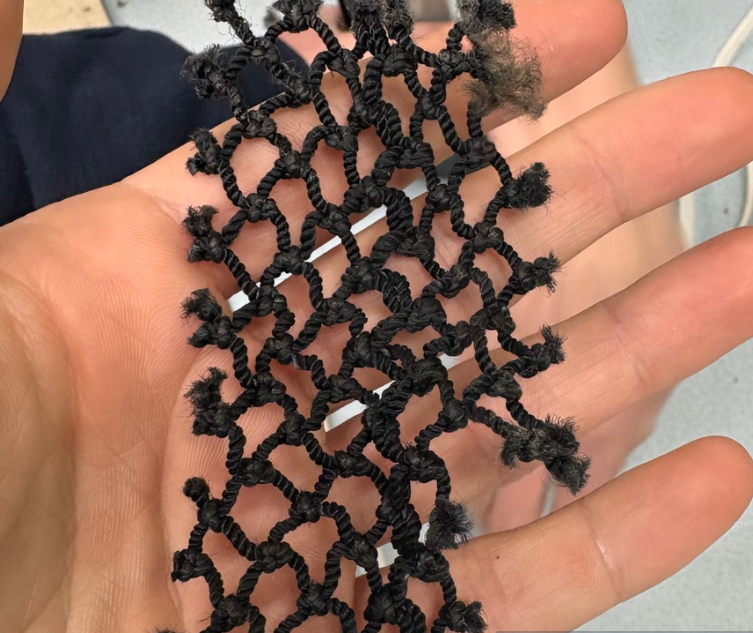
Fishnet segment
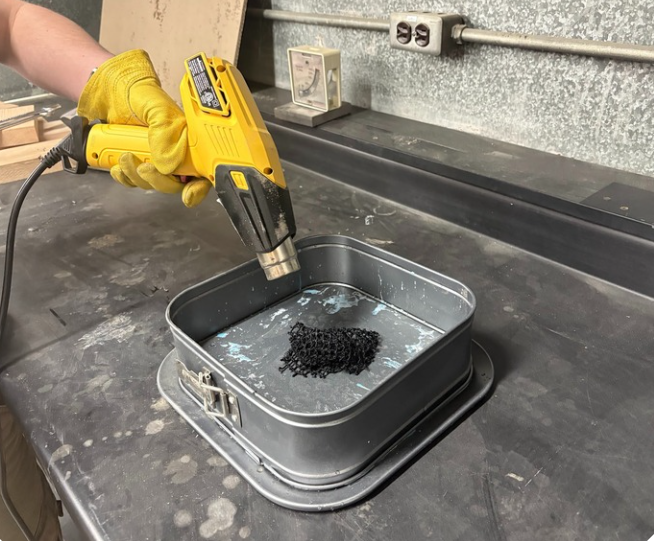
Melting the polypropylene netting for prior to grinding
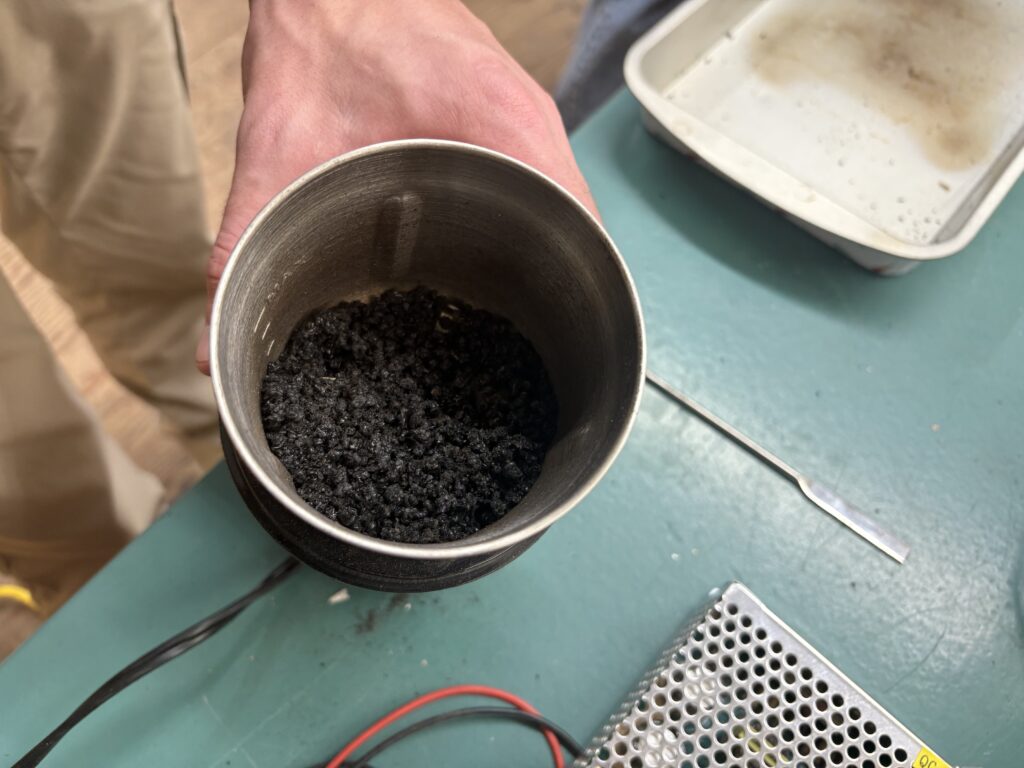
Ground netting
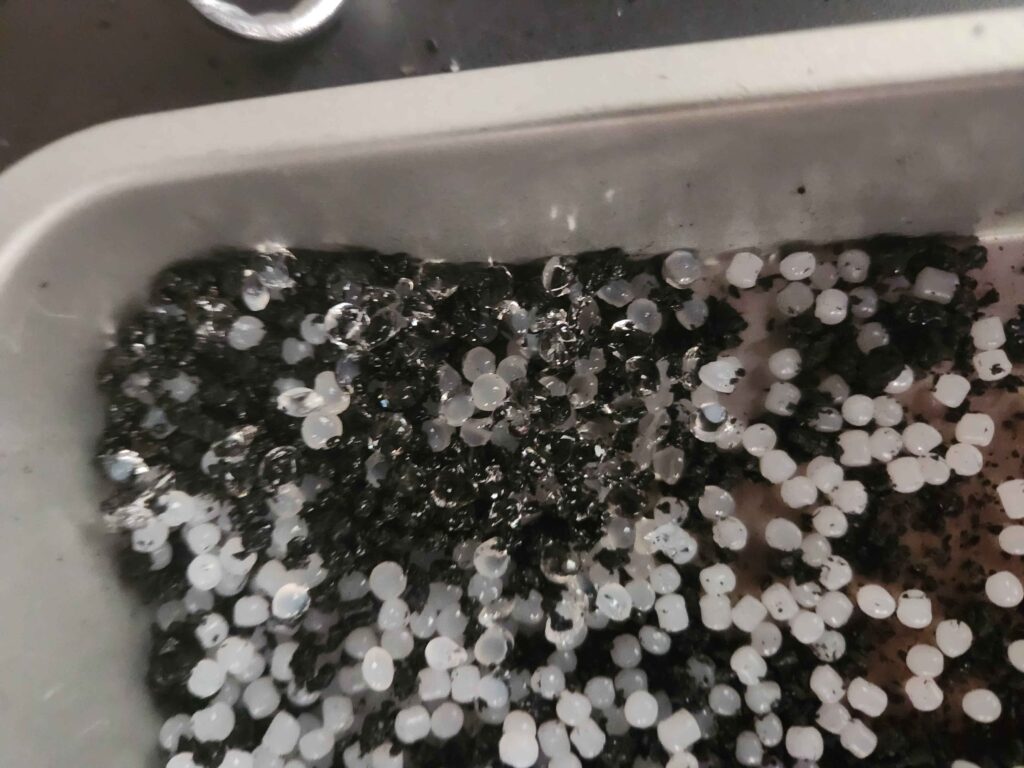
Polypropylene mixing trial

Filling the Filastruder to produce filament from the reclaimed netting

Filament trials
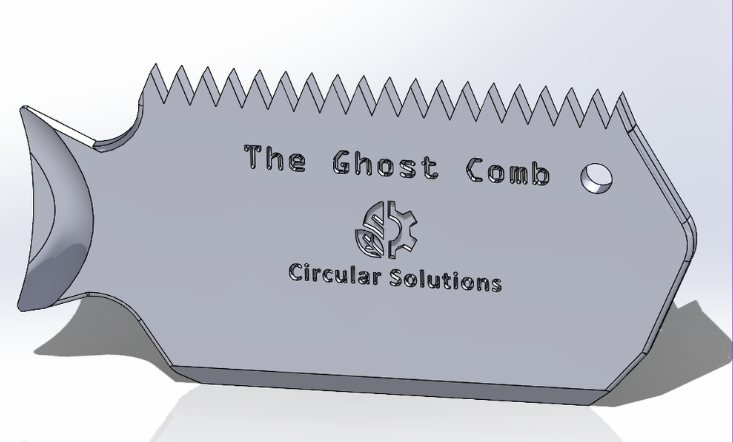
Final design 3D CAD model
Project Challenges
Working with ocean-recovered plastic presented several technical challenges, including:
– Material degradation from UV and salt exposure
– Reduced filament strength and flexibility
– Consistency issues during extrusion
The team explored solutions such as improved cleaning methods and incorporating biomaterials like hemp fibers to enhance filament performance.
These experiments provided valuable insights into the technical and material challenges associated with recycled manufacturing.
Impacts
The Biodesign Sprint project demonstrated the feasibility of converting ocean waste into functional consumer products. Although a fully recycled Ghost Comb prototype has not yet been completed, the team successfully:
– Developed a filament production process
– Designed and prototyped a functional product
– Presented the concept in competition
– Advanced research into circular material reuse
This project represents an important step toward scalable solutions that transform waste into valuable resources and support a circular bioeconomy.