
Project Overview
The Solar Table Project utilized retired solar panels donated by a Michigan Tech research lab, giving new life to materials that would have otherwise been discarded. The Circular Solutions team designed and built a solar-powered table using reclaimed materials to create a functional outdoor workspace that provides renewable energy for everyday use. By repurposing these panels into usable campus infrastructure, the project demonstrates how circular design can extend the life of renewable energy technologies while reducing material waste.
Building on an initial prototype, the team developed an improved design that incorporated integrated bench seating, upgraded electrical components, and a waterproof electronics enclosure to ensure durability in outdoor conditions. Using CAD modeling and hands-on fabrication, the team refined the structure to improve stability, usability, and overall performance. The completed prototype was successfully installed outside the Electrical Energy Resources Center (EERC), where it now serves as a public charging station powered by solar energy outside of the winter months. This project highlights the potential to repurpose retired renewable energy equipment into practical, sustainable solutions that continue to provide value long after their original use.
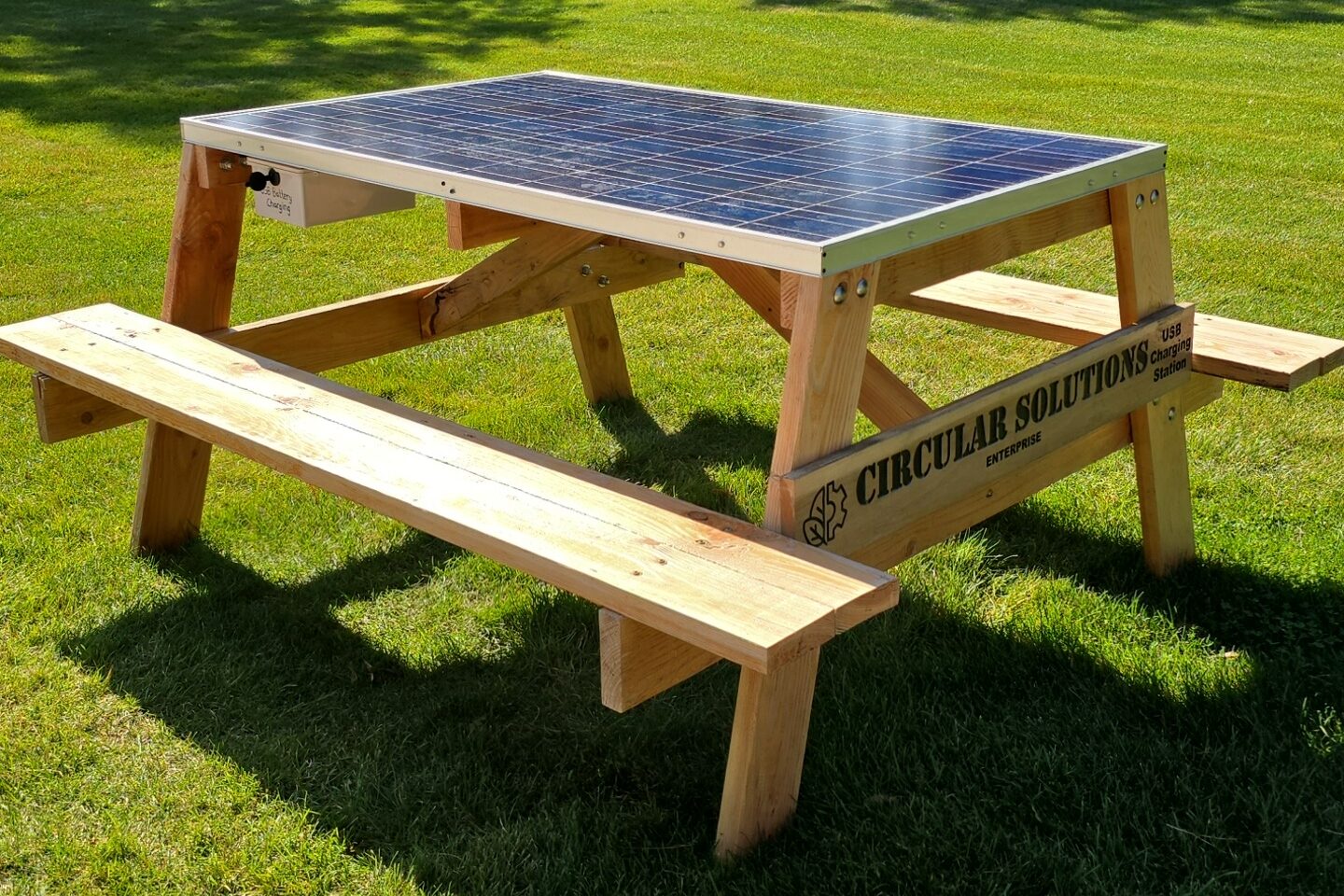
Completed solar table on the Michigan Tech campus lawn
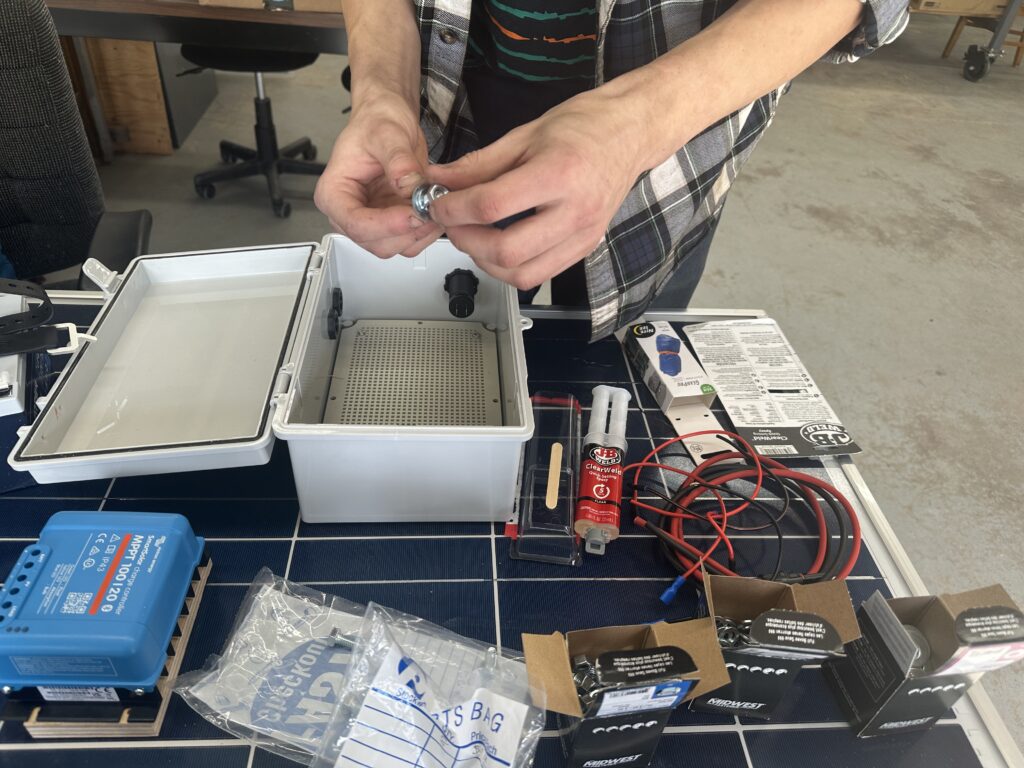
Beginning of electrical assembly
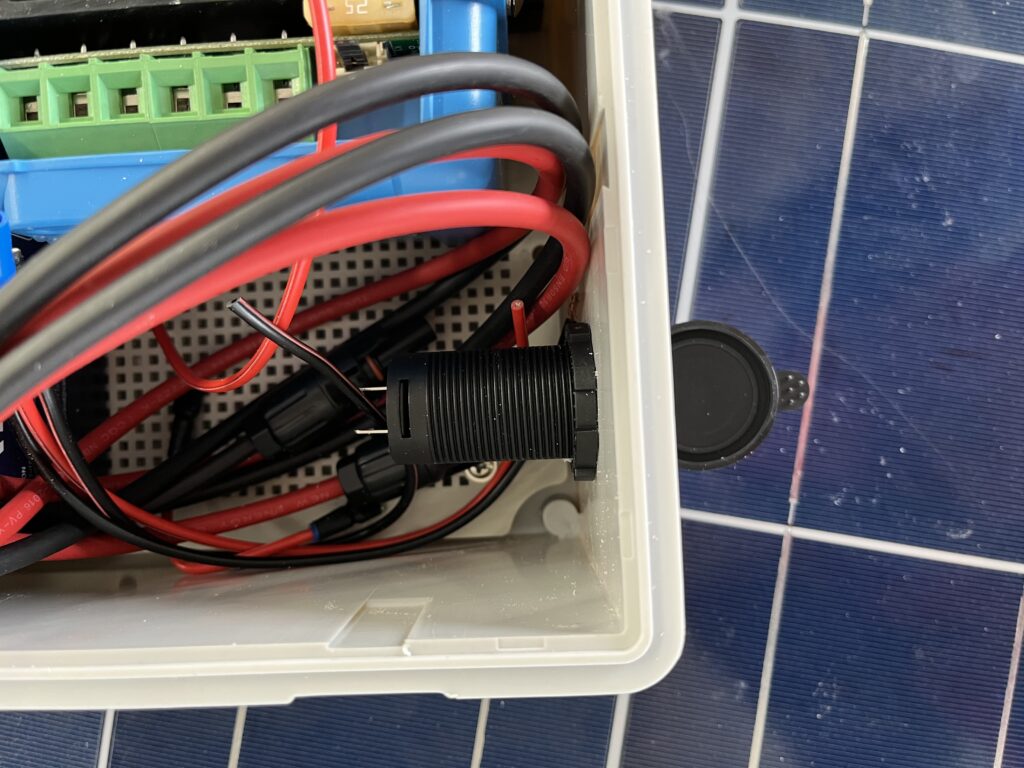
Electrical assembly
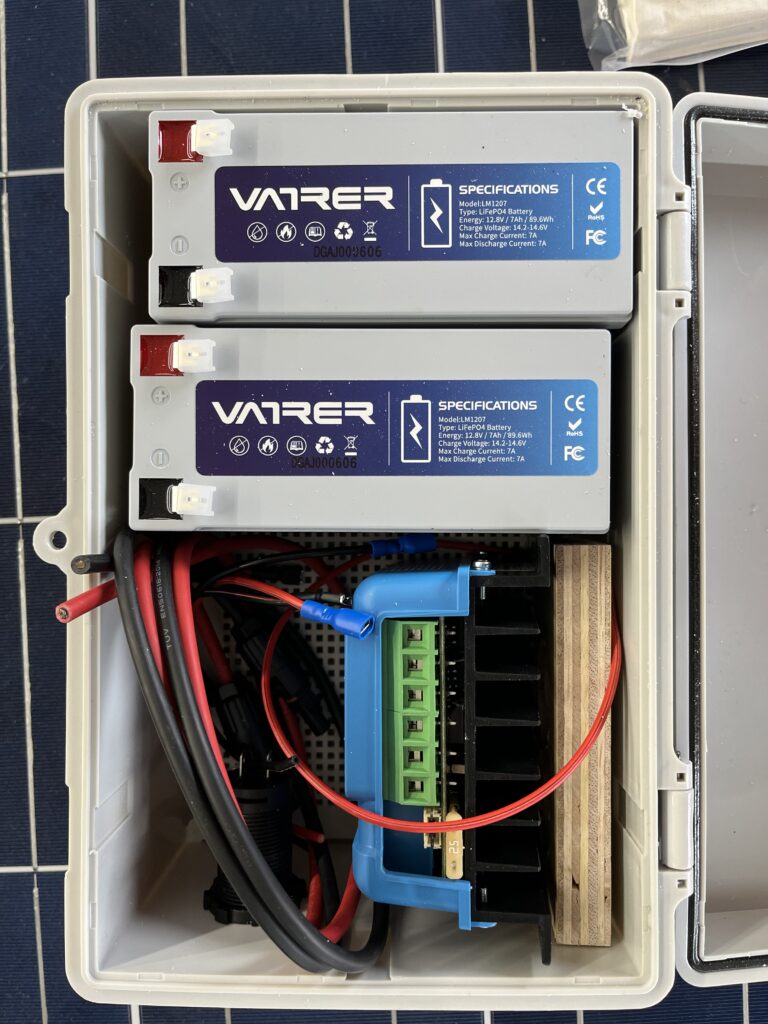
Electrical assembly
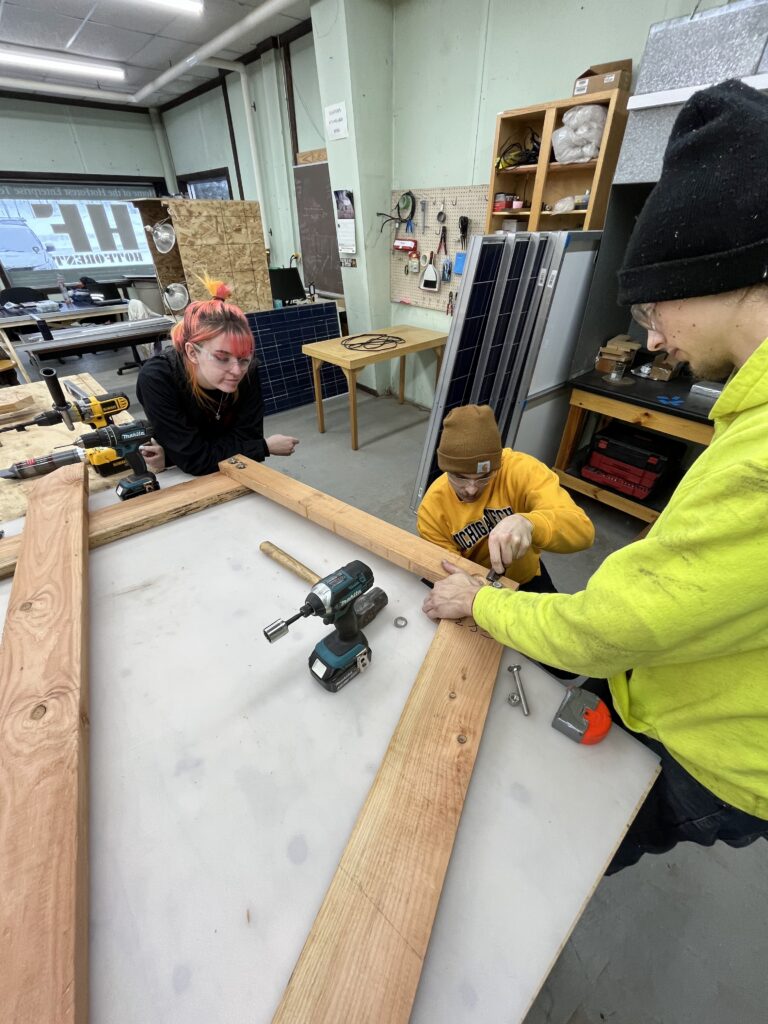
Solar table frame assembly

Lumber processing
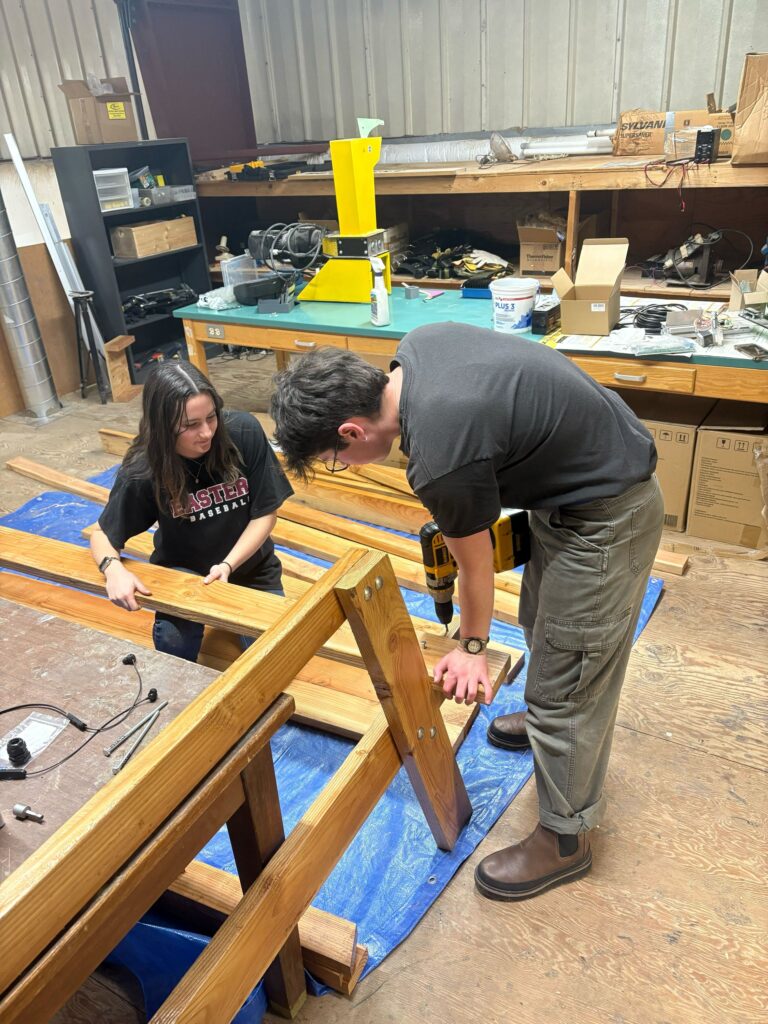
Solar table assembly
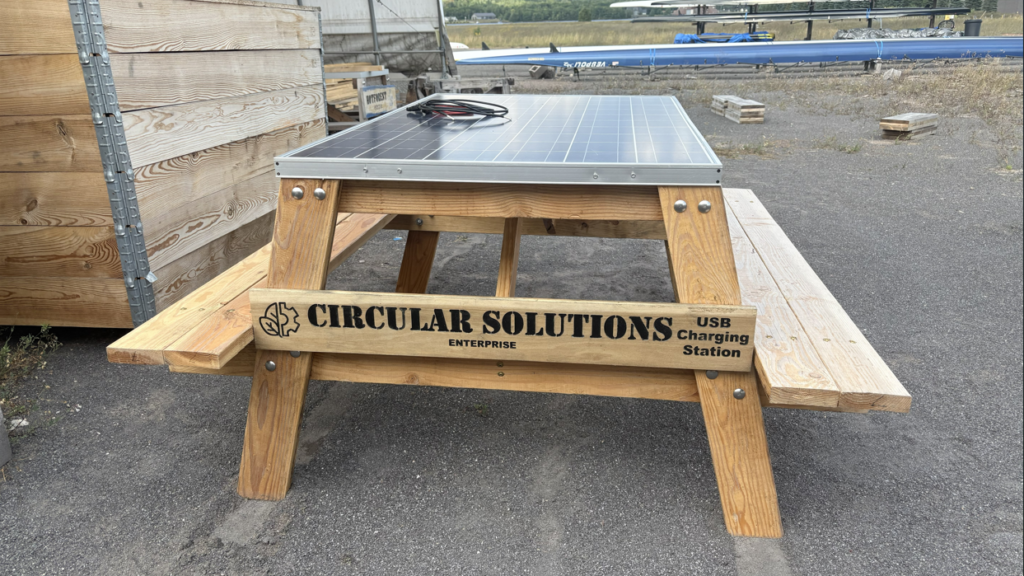
Newly completed solar table
What Happens to Retired Solar Panels?
As solar technology advances, older panels are often removed from service despite still being capable of generating electricity. Without viable reuse options, many of these panels risk becoming waste.
The Solar Table Project worked to address this challenge by exploring ways to give retired panels a second life. Instead of being discarded, these panels can be repurposed into energy producing infrastructure that continues to provide value. This approach supports circular economy principles by reducing waste and maximizing the usefulness of existing materials.
Design and Development
The team began with an initial prototype and worked to improve the design for long-term campus use. Using CAD modeling, the team refined the table’s dimensions, structure, and component layout to ensure safety, stability, and functionality. The updated design included several key improvements, such as:
– Integrated bench seating for improved usability
– Waterproof electronics enclosure for durability
– Improved battery and electrical connections
– USB-C charging ports for modern device compatibility
These improvements helped create a more reliable and user-friendly system capable of supporting everyday campus use.
Building and Implementation
After finalizing the design, the team constructed the second prototype and prepared it for installation on campus. The completed solar table was successfully deployed outside the Electrical Energy Resources Center (EERC), where it is now available for public use outside of the winter months.
The project was also highlighted at major campus events, including Enterprise Day and Design Expo, allowing students, faculty, and visitors to see firsthand how retired solar panels can be transformed into functional infrastructure.
Challenges
Throughout the build process, the team encountered several engineering and fabrication challenges, including hardware compatibility, structural assembly, and transportation logistics. These obstacles required design adjustments and iterative problem-solving.
Overcoming these challenges helped the team gain valuable experience in:
– Mechanical design and fabrication
– Electrical system integration
– Prototype iteration and improvement
– Real-world project implementation
Impacts
The Solar Table Project demonstrates how circular design can be applied to renewable energy systems, turning retired solar panels into functional and educational infrastructure. The deployed prototype provides renewable charging capability while raising awareness of sustainable engineering practices.
Future development goals include:
– Using recycled batteries
– Reducing overall material use
– Improving transportability with modular design
– Exploring scalable deployment across campus
With two successful prototypes completed, the project highlights the potential to expand solar table installations and continue repurposing renewable energy materials in innovative ways.